8.6.25

FNAF 2 PSX


Developers: Soeiz

Release Date: February, 2024 

Last Update: December, 2024

Graphics: 2D

Version: 1.0.3 

Genre: Horror

Players: 1 or 2


Description

The original Five Night at Freddy's 2, but on the Playstation !


Extra info

"By using ancient scrolls left by the ancestors (psyq + nugget sdk) and my past experiences, I've made my way into playstation 1 programmation, and now I am developing this demake.

This demake is not something you'll have to play on PC with a .exe, you'll have to play it with an ps1 emulator, or the actual console !

If you wanna play on the real hardware, you'd have to modchip it, use the disc swap method or FreePSXBoot ! (google it)

The game has unique things that were not on the OG game, such as two player mode, Custom night with far more options, easter eggs, and more!"


Media


Official Download Links

Github - Game Jolt

5.6.25

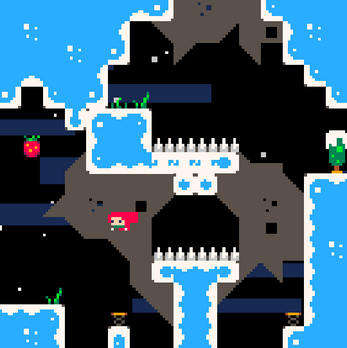
Celeste Classic PSX (psn00bsdk)


Developer:  wildmonkeydan

Release Date: July, 2023

Last Update: July, 2023

Graphics: 2D

Version: 1.1

Genre: Platformer

Players: 1

Description

This is a portable Celeste Classic C source port, adapted specifically for the original PlayStation using psn00bsdk, the open-source SDK for PSX development.


Extra info

Celeste Classic is the original prototype of Celeste, created by Maddy Thorson and Noel Berry during a game jam. This version represents the foundation of what would later become one of the most acclaimed indie platformers of all time. Built with a minimalist approach, Celeste Classic focuses on tight controls, precise platforming, and a pure gameplay loop, showcasing the core ideas that would define the full commercial release.

Unlike the later versions, Celeste Classic features simple pixel art, a limited color palette, and a condensed structure, offering a raw and challenging experience that emphasizes skill and mastery over narrative and presentation.

This project is built using cceleste, a C source port of the original PICO-8 release, combined with psn00bsdk, an open-source development kit for the original PlayStation. Together, they make it possible to faithfully bring this minimalist platforming experience to PS1 hardware.

It is important to note that the game does not support pausing or save states. Attempting to use save states will result in a crash.

It's also worth noting that the game has issues when emulated (for example, with DuckStation) since it gets stuck on the PlayStation logo. The developer recommends playing the game directly on modded hardware.


Changelog

V. 1.1

Minor update fixing a couple of bugs:
  • Fixed an issue where the ending statistics were not displayed after completing the game.
  • Corrected the Celeste Mountain Memorial, restoring both the missing text and sound elements to ensure the scene plays as intended.


Media


Official Download Links

Itch.io - Github - PSXDEV

24.5.25

Half Life PSX


Developer: XProger

Release Year: TBA

Graphics: 3D

Genre: Adventure & FPS

Players: 1

Description

This ambitious homebrew project brings the legendary Half-Life 1 experience to the original Sony PlayStation by XProger. This adaptation reimagines Gordon Freeman’s iconic journey through the Black Mesa Research Facility within the technical limits of the PS1 hardware.


Extra info

Rather than being a simple port, this project is a full reimplementation of the original 1998 PC classic. The goal is not to emulate the PC version, but to rebuild the experience specifically for PS1 hardware. This distinction is important: the project does not use the original GoldSrc engine. Instead, it reinterprets the game’s systems, rendering pipeline, and level handling to work natively on PlayStation architecture.

Bringing Half-Life to the PS1 presents major challenges, particularly regarding memory limitations, geometry handling, and loading times. However, the developer has outlined several clever solutions.


Streaming Instead of Traditional Load Zones

When asked about the RAM limitations and whether the game would require heavy segmentation into loading areas, XProger explained that he plans to rely on streaming:

"Each location will require about 2 seconds to load at full x2 CD speed, so unless you're bunny-hopping through levels, loading gaps should be barely noticeable."

This approach aims to reduce visible loading screens, maintaining immersion while staying within the PS1’s limited memory constraints.


Polygon Handling and GPU Constraints

Interestingly, optimization on the PS1 does not always mean reducing polygons. According to the developer:

"The PS1 GPU actually requires increasing the number of polygons."

Because of the console’s rendering architecture, which relies on affine texture mapping and lacks hardware perspective correction, meshes need to be structured differently compared to PC geometry. 

This is a clear example of how porting to PS1 is not about “downgrading,” but about restructuring assets to fit a fundamentally different rendering pipeline.


BSP Conversion and Custom Tools

One of the most technically fascinating aspects of the project is level conversion.

The original Half-Life uses BSP (Binary Space Partitioning) level files. Instead of directly using those files, XProger developed:

  • A Blender importer for original BSP files

  • Tools for geometry tile splitting

  • Room assignment systems

  • Portal placement tools

  • UV adjustment utilities

  • A custom exporter to the PS1-specific format

He also noted that the original BSP geometry is not ideal for direct use, requiring significant restructuring for optimal PS1 performance. This toolchain effectively creates a translation layer between GoldSrc-era level design and PlayStation-compatible rendering.


Storage and Format Consideration

When asked how many CDs the project might require, XProger pointed out that the PS1 natively supports ADPCM audio and 4-bit textures, both space-efficient formats. In fact, he suggested that, in theory, the entire game could fit within 64MB.

This highlights how much optimization is possible when building directly around the console’s native capabilities rather than attempting a raw asset conversion.


Why This Project Matters

The original Half-Life never received an official PlayStation 1 release. While a Dreamcast port was developed (but never officially released), the PS1 never saw Gordon Freeman’s Black Mesa incident on its hardware.

This makes the project especially significant within the PSX homebrew scene. It represents:

  • A full engine reimplementation

  • A technically complex FPS adaptation

  • A large-scale modern project targeting original hardware

  • A demonstration of how far PS1 homebrew has evolved

If completed, this would stand as one of the most technically impressive FPS projects ever attempted on original PlayStation hardware.


Media


Project MTP


Developer: 

Release Year: TBA

Graphics: 3D

Genre: Horror & Adventure

Players: 1

Description

Project MTP is currently one of the most ambitious and closely followed PSX homebrew projects in development. Although the game still does not have an official title, it has already gained significant attention within the retro development community thanks to its unique concept and consistent public progress updates.


Extra info

At its core, the project blends life simulation mechanics with psychological horror elements, an unusual combination for the original PlayStation. The game draws inspiration from cozy, routine-driven social experiences (Animal Crossing) while layering them with subtle tension, eerie atmosphere, and unsettling undertones (Silent Hill). What initially appears to be a calm town environment gradually reveals strange details and darker implications beneath the surface.
 
Rather than relying purely on jump scares or traditional survival horror mechanics, Project MTP seems to focus on mood, environmental storytelling, and the contrast between familiarity and discomfort. The idea of merging daily life simulation with psychological horror gives it a distinctive identity within the PSX homebrew scene.
 
The developer, Elias Daler, documents the project’s progress almost daily on Twitter. His posts include gameplay clips, technical experiments, rendering improvements, lighting tests, AI behavior, and insights into the development pipeline. This level of transparency has helped build a dedicated following of retro hardware enthusiasts, programmers, and indie developers who are interested not only in the game itself, but also in the technical challenges of developing for original PlayStation hardware in the modern era.
 
Developing for the PS1 remains a demanding process, particularly compared to other retro platforms that now benefit from mature open-source tools and extensive libraries. Elias has openly shared his frustrations about the limited ecosystem available for PS1 development, once stating:
“I’m jealous of what N64 devs have: all the tools, tons of libraries, and a platform that is pretty powerful. Doing PS1 stuff is like doing a Primitive Technology programming. And this is why my game development doesn’t progress that fast. But I won’t give up.”

This persistence and commitment to pushing the hardware’s limits is part of what makes Project MTP stand out. The project is not only an intriguing horror experience in development, it is also a live demonstration of what modern developers can still achieve on Sony’s 32-bit console.


Media


Links

Twitter (X) - Youtube - Official Websitte

23.5.25

Sonic The Hedgehog XA


Developer: 

Release Date: June, 2024

Last Update: August, 2025

Graphics: 2D

Version: 0.6

Genre: Platformer

Players: 1

Description

Sonic The Hedgehog XA is a 2D platformer designed specifically for the original PSX, developed as an open-source technical experiment to evaluate how Sega-style, high-speed gameplay can be implemented on PS1 hardware. Rather than being a port or remake of an existing Sonic title, the project is a ground-up implementation that recreates the core mechanics, physics, and structure of classic Sonic games within the constraints of Sony’s 32-bit system.


Extra info

Sonic XA is a 2D platformer designed to capture the classic speed and precision of Sonic games while exploring the technical possibilities of the PlayStation. Players control Sonic (or other characters like Tails, Knuckles, and Amy Rose) to navigate through levels filled with ramps, loops, and hazards, collecting rings and defeating enemies along the way. Each character has unique movement abilities and attacks, such as Sonic’s Spindash and Super Peel-Out, or Amy’s Piko Piko Hammer and double jump, allowing for varied exploration and combat strategies. Levels feature dynamic objects, moving platforms, and interactive enemies, emphasizing fast-paced action, precise platforming, and experimentation with character-specific mechanics.

The game was presented at SAGE 2025:

"SAGE is a yearly, non-profit put together by Sonic Fan Games HQ and it's partners to support, promote and celebrate the community's creative efforts."

According to its creator,  this project aims to merge classic 2D Sonic gameplay with the unique capabilities of the original PlayStation hardware. Rather than simply recreating a Mega Drive-style experience, the goal is to explore how Sonic could have felt if the series had received a proper 2D entry on Sony’s 32-bit console during the 1990s.

By leveraging modern open-source tools such as PSn00bSDK, the developer is effectively building a reinterpretation of Sonic mechanics on hardware that was never originally designed for this type of fast-paced, sprite-based platforming. The project respects the core principles of the original games (speed-driven level design, momentum-based physics, and expressive character animation) while experimenting with what the PlayStation can uniquely bring to the formula, particularly in terms of audio and presentation.

It is important to stress that the current build is a demo. The developer clearly warns that this is unfinished, beta-quality software. Large portions of the codebase remain incomplete, performance optimizations have not yet been fully implemented, and many gameplay systems are still in development. As such, players should expect rough edges, missing features, and technical limitations typical of an early-stage build.


What Does “XA” Mean?

The “XA” in the project’s title is a direct reference to the XA audio format widely used on the original PlayStation. XA (eXtended Architecture) audio was commonly employed for streaming music and voice data directly from CD-ROM, becoming one of the defining technical features of the console’s sound capabilities.
 
By incorporating “XA” into the title, the developer not only highlights the technical identity of the platform but also reinforces the project’s PlayStation-focused nature. The naming choice adds personality and originality while subtly nodding to Sonic CD, a title well known for its distinctive audio presentation and CD-based enhancements. In this sense, the name serves both as a technical reference and a stylistic tribute.


Regional Builds: U, E, and J Versions

The project also includes multiple regional builds, mirroring the traditional distribution model of commercial PlayStation titles. These versions are labeled according to standard regional codes:
  • U – USA

  • E – Europe

  • J – Japan

The U (USA) and J (Japan) versions both run at NTSC 60Hz, providing smoother animation and faster overall gameplay timing. Meanwhile, the E (Europe) build runs at PAL 50Hz, which affects gameplay speed due to the lower refresh rate. Because the game is frame-rate locked, the PAL version may feel slightly slower or more “floaty” compared to its NTSC counterparts.
During that era, it was common for PAL releases to run slower because of the 50Hz refresh rate. Some developers took the extra step of reworking timing and animations to maintain identical gameplay speed to the NTSC versions, but others did not, resulting in slightly slower or “floatier” experiences in certain European releases. 


Changelog

V. 0.6

  • Playable Character: Amy Rose. Unlockable after completing all main levels. Features unique vertical movement: higher jumps, slower acceleration, and special abilities. A cheat code allows access without completing the game.
  • Gameplay & Technical Fixes: Player top sensors fixed to prevent clipping, improved hitbox framework, Tails’s flight hitboxes corrected, and spin dash dust effect restored. Animals now render correctly in front of the player.
  • Disc & Audio Updates: Fall-back routines added for disc track loading issues, and disc track count now visible in OPTIONS.
 

V. 0.5.1

  • Offscreen Character Rendering: Major improvement in sprite handling. Characters are now rendered offscreen to prevent rotation distortion and visual gaps, resulting in cleaner and smoother animations.
  • Red Book Audio: Background music now uses CD-quality audio (44.1 kHz), replacing the previous .XA tracks, improving sound clarity and looping.
  • Level-Specific Objects: Each level can now have unique objects with custom behaviors and palettes. Supports solid platforms, spawnable items, doors, switches, and puzzles.
  • Enemies: Fully implemented level-specific enemies, including spawning and de-spawning mechanics. Adds challenge and brings levels to life.
  • Bosses: Two playable bosses added, with independent memory, palettes, and glow-on-hit effects for visual feedback.
  • Memory Management: Improved allocation, with most level data now handled by the screen arena allocator, reducing static memory use.
  • Gameplay Enhancements: Added 1-ups from collected rings (up to 800), pause menu, and audio controls (stereo, reversed stereo, mono, and volume adjustments).
  • Polish and Bug Fixes: Removed debug mode from release build, fixed visual distortions, and refined general gameplay systems.


V. 0.1

  • Updated sprites and extra animations for Sonic.
  • Ramp Rotation: Sonic now rotates on slopes with angle snapping for smoother movement.
  • Character Animations: Added underwater bubble-gulping and improved ledge balancing animations.
  • Super Peel-Out Move: Charge a high-speed dash, faster than the Spin Dash.
  • Playable Characters: Tails and Knuckles are now playable, expanding the game beyond Sonic.


For more detailed info about the different versions, check official links:

V. 0.1V. 0.51 - V. 0.6


Media


Official Download Links

Official Website - Itch.io - Github